

Outsourced IT Support vs. In-House Solutions Explained
In the rapidly evolving landscape of technology, businesses face a critical decision regarding their IT support: should they opt for outsourced IT support or maintain an in-house team? This article delves into the nuances of both approaches, providing insights into their respective advantages and disadvantages. Readers will learn about the key differences between outsourced IT support and in-house solutions, particularly in the context of managed IT services in Chicago. As companies strive to optimize their operations, understanding these options is essential for making informed decisions that align with their business goals. We will explore management structures, cost implications, and the expertise available through each model, ultimately guiding small and medium businesses in Chicago toward the best choice for their IT needs.
Outsourced vs. In-House IT Support in Chicago | Top Gear Technologies
Outsourced IT support refers to the practice of hiring third-party service providers to manage a company’s IT needs, while in-house solutions involve employing internal staff to handle IT operations. In Chicago, where the tech landscape is competitive, businesses must weigh the benefits of each model. Outsourced IT support can offer flexibility and access to a broader range of expertise, while in-house solutions provide greater control and immediate response capabilities. Understanding these definitions sets the stage for a deeper exploration of their implications for businesses in the area.
Key Differences:
Management Structure:

The management structure of outsourced IT support typically involves a third-party provider overseeing IT operations, which can lead to streamlined processes and specialized expertise. In contrast, in-house solutions rely on internal staff who are directly managed by the company’s leadership. This difference can significantly impact how quickly issues are resolved and how well the IT strategy aligns with overall business objectives.
Cost Structure:
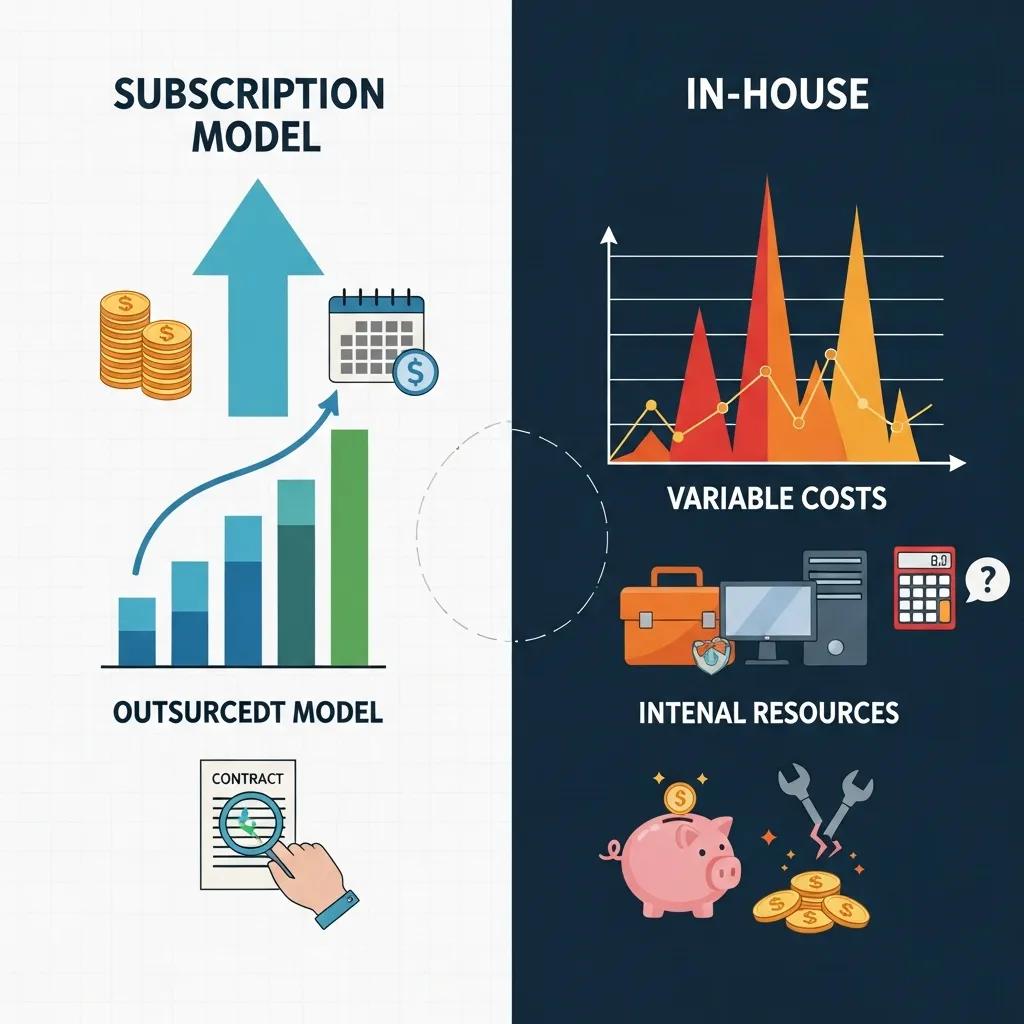
When comparing cost structures, outsourced IT support often operates on a subscription model, providing predictable monthly expenses. This can be advantageous for budgeting purposes. In-house solutions, however, may incur higher costs due to salaries, benefits, and ongoing training for staff. Understanding these financial implications is crucial for businesses looking to optimize their IT expenditures.
Expertise and Resources:
Outsourced IT support typically grants access to a wider pool of specialized knowledge and resources, which can be particularly beneficial for small and medium businesses that may not have the budget to hire multiple experts. In-house teams, while potentially more familiar with the company’s specific needs, may lack the breadth of expertise that external providers can offer. This distinction is vital for businesses aiming to leverage the latest technologies and best practices.
Advantages:
Outsourced IT Support:
- Cost Savings: Outsourcing can reduce overhead costs associated with hiring and training in-house staff.
- Access to Expertise: Businesses gain access to a team of specialists with diverse skills and experience.
- Focus on Core Business: Companies can concentrate on their primary operations while leaving IT management to experts.
In-House Solutions:
- Greater Control: In-house teams allow for direct oversight and alignment with company culture and goals.
- Immediate Response: Internal staff can respond quickly to issues, minimizing downtime.
- Tailored Solutions: In-house teams can develop customized IT strategies that fit the specific needs of the business.
Disadvantages:
Outsourced IT Support:
- Less Control: Companies may have limited oversight over third-party providers, which can lead to misalignment with business objectives.
- Potential Communication Gaps: Working with external teams can sometimes result in misunderstandings or delays in communication.
- Dependency on Provider: Relying on an external provider can create vulnerabilities if the relationship deteriorates.
In-House Solutions:
- Higher Costs: Maintaining an in-house team can be more expensive due to salaries and benefits.
- Resource Limitations: In-house teams may lack the diverse expertise available through outsourced providers.
- Risk of Burnout: Internal staff may face increased pressure, leading to potential burnout and turnover.
Important Considerations for Businesses:
When deciding between outsourced IT support and in-house solutions, businesses should consider several factors. These include the size of the organization, the complexity of IT needs, and budget constraints. Additionally, companies should evaluate their long-term goals and how each option aligns with their strategic vision. Understanding these considerations can help businesses make informed decisions that support their growth and operational efficiency.
Indeed, establishing clear criteria is paramount for managers navigating the complexities of choosing between internal and external IT solutions.
Criteria for In-House vs. Outsourced IT Decision-Making
likely candidates for outsourcing and which should be kept in-house? A set of criteria for managers to make these decisions is given and examples of such outsourcing are discussed.
To outsource or not?, 1992
What Are the Core Differences Between Outsourced IT Support and In-House IT Solutions?
The core differences between outsourced IT support and in-house solutions primarily revolve around cost implications, service quality, and scalability. Outsourced support often provides a more flexible and cost-effective solution, while in-house teams can offer tailored services and immediate responsiveness. Businesses must assess their unique needs to determine which model best suits their operational requirements.
How Does Outsourced IT Support Operate for Small and Medium Businesses in Chicago?
Outsourced IT support for small and medium businesses in Chicago typically involves managed IT services that encompass both onsite and remote support. Providers offer a range of services, including network management, cybersecurity, and help desk support, allowing businesses to focus on their core operations while ensuring their IT infrastructure is robust and secure.
What Are the Advantages and Limitations of In-House IT Support Teams?
In-house IT support teams provide several advantages, including greater control over IT operations and the ability to develop customized solutions. However, they also face limitations, such as higher operational costs and potential resource constraints. Businesses must weigh these factors when considering their IT support strategy.
What Are the Key Benefits of Outsourced IT Support for Chicago SMBs?
Outsourced IT support offers several key benefits for small and medium businesses in Chicago, including:
- Cost Savings: Reduced overhead and predictable expenses.
- Access to Expertise: Specialized knowledge and skills from a dedicated team.
- Scalability: Flexible service plans that can grow with the business.
These advantages make outsourced IT support an attractive option for many Chicago-based SMBs looking to enhance their IT capabilities.
How Does Outsourced IT Support Enhance Cost Efficiency and Scalability?
Outsourced IT support enhances cost efficiency by reducing the need for extensive in-house resources and allowing businesses to pay only for the services they need. Additionally, it offers scalability, enabling companies to adjust their IT support as their needs evolve, ensuring they are not overpaying for unnecessary services.
In What Ways Does Outsourced IT Support Improve Security and Proactive Monitoring?
Outsourced IT support improves security through proactive network monitoring and the implementation of robust cybersecurity measures. Providers often have access to the latest security technologies and practices, which can help protect businesses from potential threats and vulnerabilities.
How Do Pricing Models Compare Between Outsourced IT Support and In-House IT?
Pricing models for outsourced IT support typically include flat-rate pricing or per-user pricing, which can provide more predictable costs. In contrast, in-house IT solutions often involve variable costs associated with salaries, benefits, and training. Understanding these models is essential for businesses to make informed financial decisions regarding their IT support.
How Should Chicago Businesses Choose Between Outsourced and In-House IT Support?
Chicago businesses should consider their specific needs, budget constraints, and long-term goals when choosing between outsourced and in-house IT support. Evaluating the advantages and disadvantages of each model can help organizations make a decision that aligns with their operational objectives.
What Factors Should Influence the Decision for Small and Medium Business Owners?
Several factors should influence the decision-making process for small and medium business owners, including the complexity of their IT needs, the size of their organization, and their budget. Additionally, businesses should consider their growth plans and how each IT support model can support their future objectives.
How Can Managed IT Services Align with Business Goals and IT Infrastructure Needs?
Managed IT services can align with business goals by providing tailored solutions that address specific operational challenges. By leveraging the expertise of outsourced providers, businesses can ensure their IT infrastructure is optimized for performance, security, and scalability, ultimately supporting their overall strategic vision.
